


Posted By SEO Root

20 mins

10/14/2026
Types of House Exterior Siding: A Side-by-Side Comparison
Choosing house exterior siding involves more than improving curb appeal. The right material helps protect your home from the weather, affects ongoing maintenance, and influences how much you spend over time. Vinyl, fiber cement, natural wood, metal, brick, and other siding materials each have different strengths and limitations.
This guide compares 10 types of home exterior siding by cost, durability, maintenance, appearance, and practical performance. You’ll also learn which options may suit different climates, budgets, and architectural styles and what to consider before replacing your existing siding.
What Are the Different Types of Siding for Homes?
Exterior siding is the outer covering installed on a home’s exterior walls. It contributes to the building’s appearance and helps protect the wall assembly from weather. However, siding alone does not make a wall waterproof or energy-efficient. Proper flashing, drainage, insulation, air sealing, and installation are also essential.
The main types of home exterior siding include:
- Vinyl siding
- Fiber cement siding
- Natural wood siding
- Engineered wood siding
- Metal siding
- Insulated vinyl siding
- Composite siding
- Brick veneer
- Stone siding and stone veneer
- Stucco
- PVC siding and exterior cladding
It is also important to distinguish siding materials from siding styles. Vinyl, wood, and fiber cement describe materials, while horizontal lap, board and batten, and shake-style siding describe how the exterior is shaped or arranged.
The best choice depends on your installation budget, local weather, maintenance preferences, expected service life, and the home’s architectural style. Comparing these factors together is more useful than choosing a material based on appearance alone.
10 Types of Home Exterior Siding and Their Pros and Cons
1. Vinyl Siding
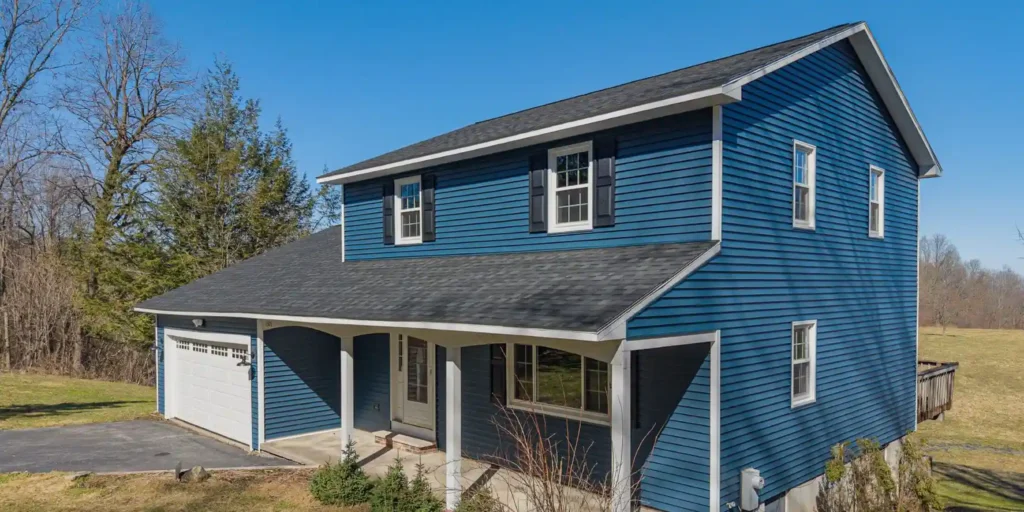
Vinyl siding is a popular choice for homeowners who want an affordable exterior without the regular painting associated with traditional wood. Made from polyvinyl chloride (PVC), it comes in numerous colors, textures, and profiles.
Pros
- Affordable and widely available.
- Requires relatively little maintenance.
- Resists rot and insect damage.
- Available in styles that imitate wood grain.
Cons
- Can crack under strong impacts or in some cold-weather conditions.
- May fade or warp under excessive heat.
- Replacement panels may be difficult to match after years of weathering.
Best for: Homeowners prioritizing affordability, color options, and easy upkeep.
Panel quality, fastening methods, wind ratings, and installation all affect performance. Before choosing vinyl, compare the product specifications and confirm that the system suits your local climate.
2. Fiber Cement Siding
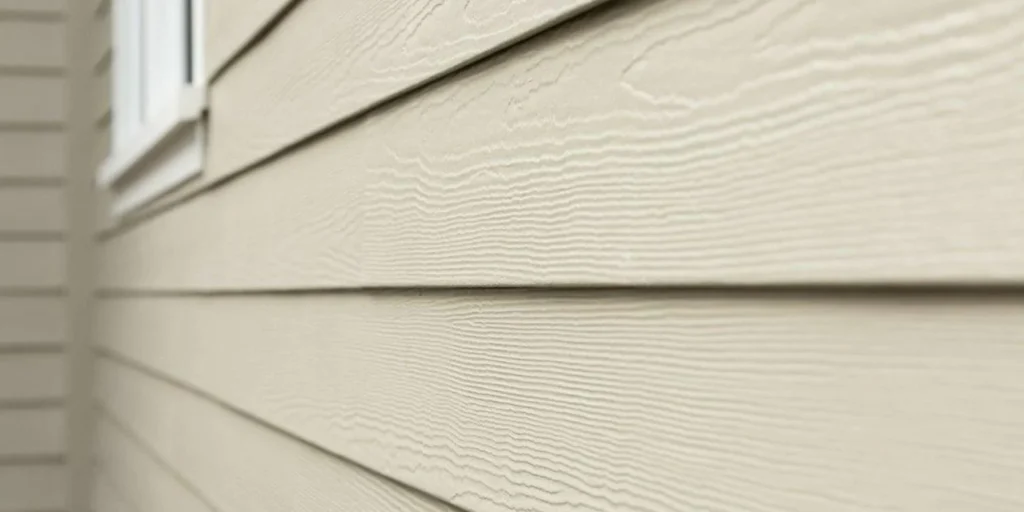
Fiber cement siding combines cement-based materials with reinforcing fibers. It can reproduce the look of painted timber, smooth boards, or traditional shingles while offering an alternative to natural wood.
Pros
- Durable when correctly installed and maintained.
- Resists rot and insect damage.
- Available in multiple textures and profiles.
- Many products offer good fire performance.
Cons
- Heavier than many other siding materials.
- Installation may require specialized tools and labor.
- Painted finishes and moisture-management details need attention.
Best for: Homeowners seeking durability, design flexibility, and a traditional or contemporary finish.
Fiber cement is worth considering if you like the appearance of wood but prefer a manufactured product. Ask installers about finish requirements, product warranties, cutting and handling procedures, and installation details.
3. Natural Wood Siding
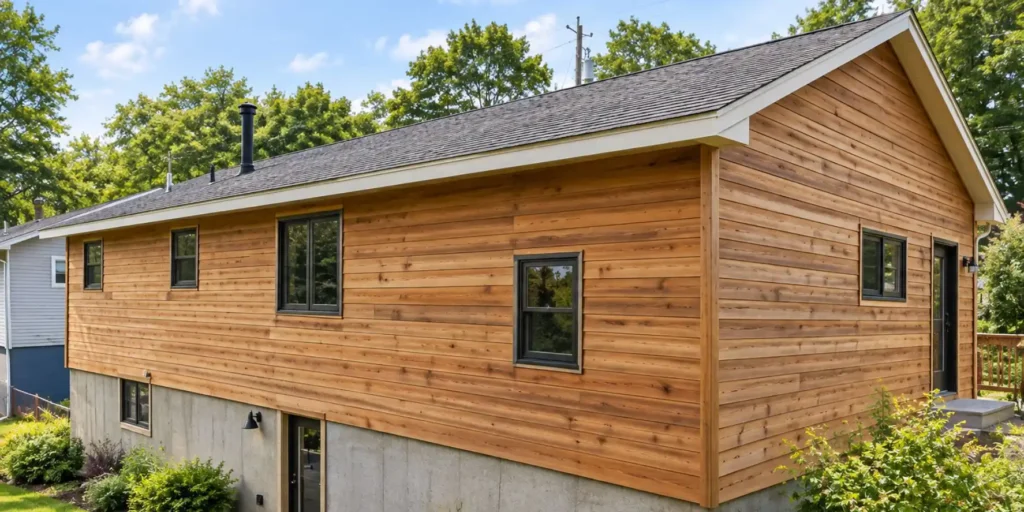
Natural wood siding provides warmth and character that manufactured products may not fully reproduce. Cedar, pine, and other suitable exterior-grade woods can be installed as horizontal boards, vertical planks, or shingles.
Pros
- Authentic grain and natural texture.
- Can be painted, stained, sanded, and repaired.
- Works with traditional, rustic, and contemporary architecture.
- Offers a range of colors and finishes.
Cons
- Often needs periodic painting or staining.
- Can be vulnerable to rot, insects, and moisture damage.
- Maintenance can increase long-term costs.
- Combustibility may be a concern in some locations.
Best for: Homeowners who value a natural appearance and are prepared to maintain it.
Wood siding performs best when water drains away from the wall and damaged finishes are repaired promptly. Inspect areas around windows, doors, rooflines, and ground-level clearances because these locations can be vulnerable to moisture.
4. Metal Siding
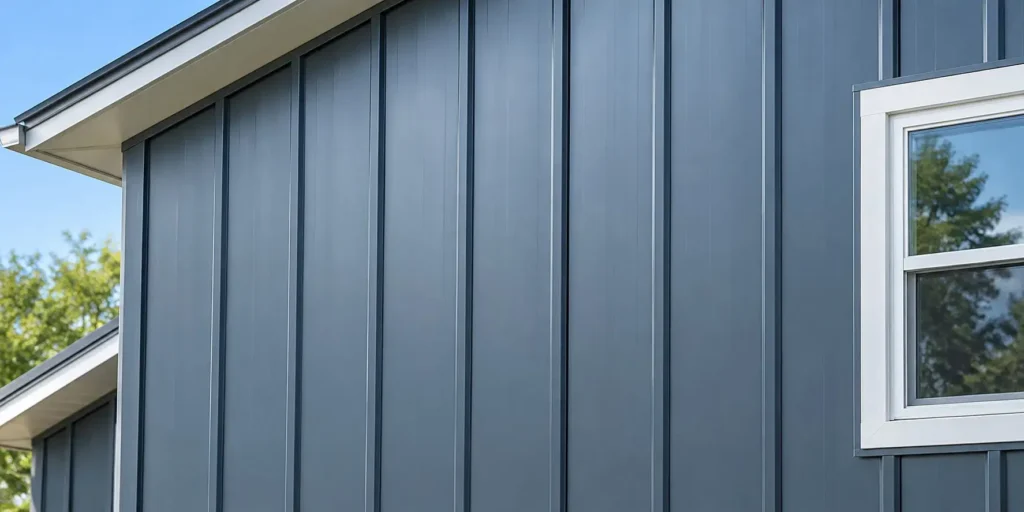
Metal siding is available primarily in steel and aluminum. Its clean lines suit contemporary homes, cabins, barns, and industrial-inspired designs. Panel shapes, coatings, and finishes can create either a traditional or modern appearance.
Pros
- Resists rot and insect damage.
- Generally requires little routine maintenance.
- Available in a variety of colors and profiles.
- Can provide a clean, contemporary finish.
Cons
- Can dent or scratch.
- Steel may corrode if its protective coating is damaged.
- Impact marks may be visible depending on the finish.
- Thermal and acoustic performance depends on the entire wall assembly.
Best for: Homeowners looking for a modern exterior with relatively low routine maintenance.
Steel and aluminum have different properties. Steel can provide strength, while aluminum is lightweight and naturally resistant to corrosion but may dent more easily. Compare coatings, impact performance, fastening systems, and warranty terms before choosing.
5. Insulated Vinyl Siding
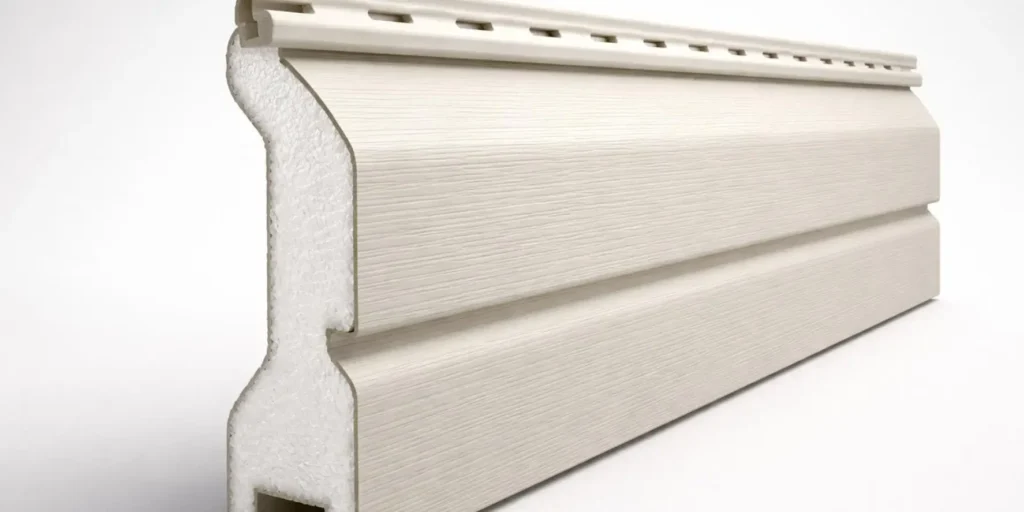
Insulated vinyl siding combines conventional vinyl panels with an insulation layer fitted behind them. This layer can add thermal resistance and may help the panels sit more evenly against the wall.
Pros
- Adds insulation behind the siding.
- May improve thermal performance.
- Retains many of vinyl’s low-maintenance benefits.
- Comes in a range of familiar vinyl colors and profiles.
Cons
- Usually, it costs more than standard vinyl.
- It does not replace a complete home insulation system.
- Installation quality affects performance.
- Energy savings depend on the existing wall and climate.
Best for: Homeowners replacing existing siding who also want to evaluate exterior insulation improvements.
Before investing in insulated siding, assess the home’s wall insulation, air leakage, windows, and moisture-management needs. Improving these areas may deliver more value than choosing a thicker siding panel alone.
6. Composite Siding
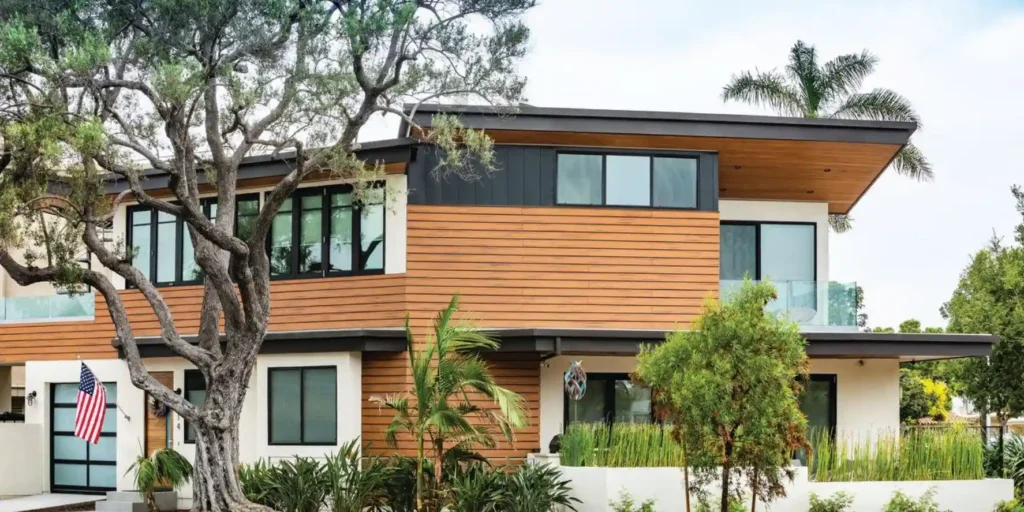
Composite siding is a broad category that includes products made from combinations of materials, such as wood fibers, polymers, cement, or other engineered components. Because the composition varies, performance can differ considerably between products.
Pros
- Available in varied textures and finishes.
- Some products offer good resistance to moisture and insects.
- Can require less refinishing than natural wood.
- Provides options for distinctive exterior designs.
Cons
- Costs depend heavily on composition and product quality.
- Durability and fire performance vary.
- Repairing or matching damaged sections can be difficult.
- Product-specific maintenance requirements need checking.
Best for: Homeowners who want a particular appearance and are willing to compare the specifications of individual products.
Do not rely on the word “composite” alone when evaluating performance. Review the material composition, installation instructions, warranty exclusions, fire classification, and maintenance requirements.
7. Brick Siding and Brick Veneer
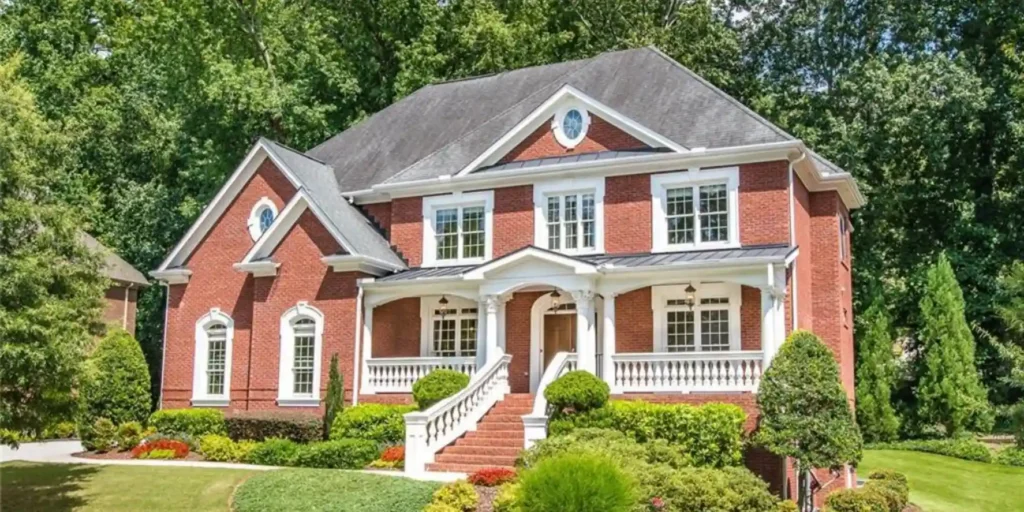
Brick provides a traditional, substantial appearance that works well with classic homes and many contemporary designs. Brick veneer uses a brick exterior facing rather than a full-thickness structural brick wall.
Pros
- Offers a distinctive, traditional appearance.
- Can last for many decades when correctly installed.
- Usually requires relatively little routine surface maintenance.
- Provides a textured finish that can complement other materials.
Cons
- Initial installation can be expensive.
- Weight and wall construction require careful planning.
- Mortar joints may need repair over time.
- Poor moisture management can damage the underlying wall.
Best for: Homeowners prioritizing a classic appearance and long-term durability.
Brick veneer needs appropriate support, flashing, drainage, and detailing. It should not be treated as a decorative layer that can simply be attached without considering how water will move through and drain from the wall system.
8. Stone Siding and Stone Veneer
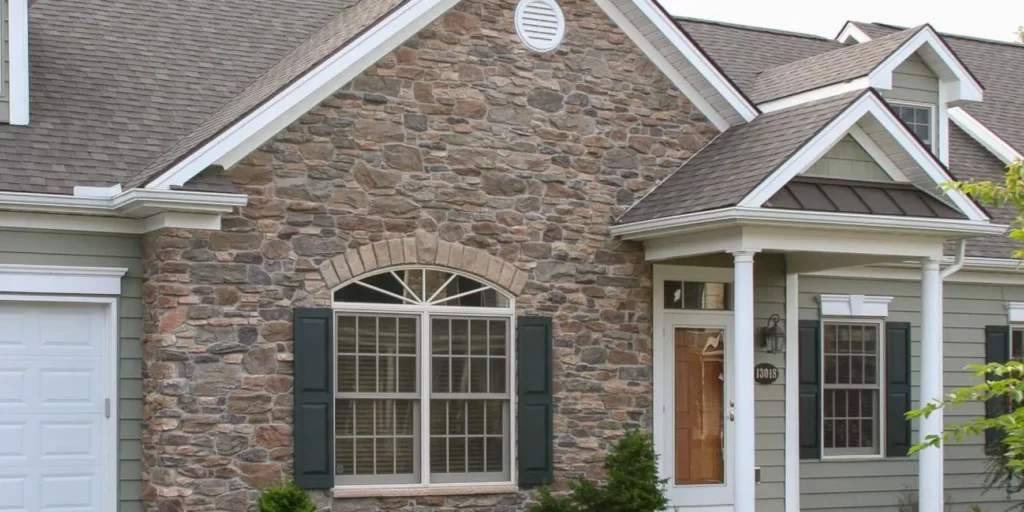
Stone siding creates a distinctive exterior through natural variations in texture, shape, and color. Natural stone and manufactured stone veneer offer different choices in appearance, weight, price, and installation.
Pros
- Creates a premium, distinctive appearance.
- Can be highly durable when correctly installed.
- Offers a wide range of colors and textures.
- Veneer products may weigh less than full-thickness stone.
Cons
- Natural stone can be expensive.
- Installation may require specialized skills.
- Weight and attachment requirements vary.
- Poor moisture management can affect the underlying wall.
Best for: Homeowners seeking a premium finish or a striking architectural accent.
Stone can work especially well around entryways, columns, foundations, and feature walls. Before choosing a veneer, confirm that the installation system, support, flashing, and water-management details suit the building.
9. Stucco Siding
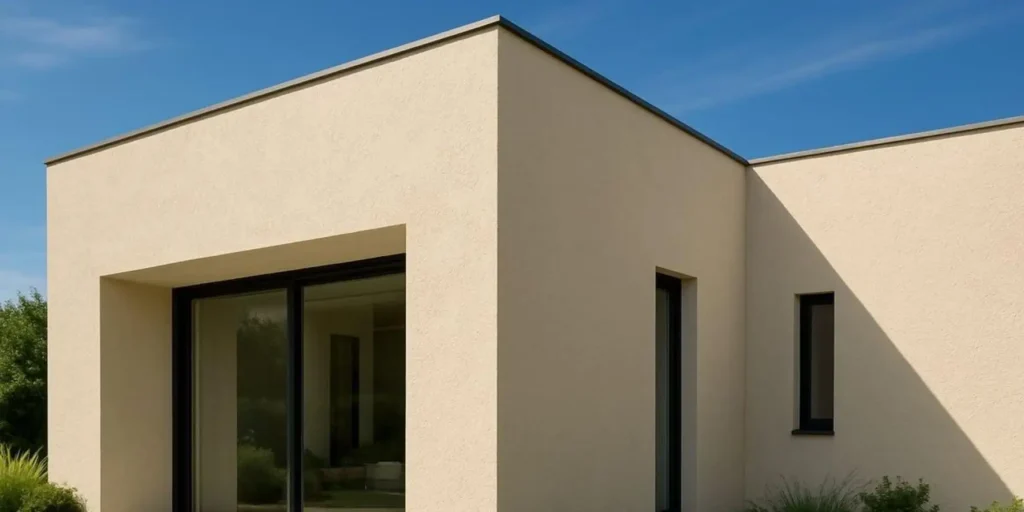
Stucco creates a continuous exterior finish using a compatible plaster system. Its smooth or textured appearance is associated with Mediterranean, Southwestern, and contemporary architecture.
Pros
- Creates a seamless exterior finish.
- Offers flexibility in colors and textures.
- Can perform well in suitable climates.
- Provides a distinctive alternative to board-style siding.
Cons
- May crack as a building settles or shifts.
- Requires careful installation and moisture management.
- Is not equally suitable for every climate or wall assembly.
- Repairs may be noticeable if the texture or color is difficult to match.
Best for: Homes where a seamless, textured exterior complements the architecture and local conditions.
The substrate, drainage details, reinforcement, and installation system all matter. Persistent cracks, damp patches, or moisture stains should be investigated instead of simply covered with a new coat.
10. PVC Siding and Exterior Cladding
PVC siding and cladding use polyvinyl chloride to create exterior panels, boards, and decorative profiles. Some products imitate painted timber, while others provide a smooth, contemporary panel finish.
Pros
- Resists rot and insect damage.
- Available in modern profiles and wood-inspired finishes.
- Often requires little routine maintenance.
- Can offer a consistent appearance across the facade.
Cons
- Excessive heat can affect some products.
- Durability and appearance vary by product quality.
- Environmental impact and recyclability depend on the formulation and local facilities.
- Fire classification and temperature limits need checking.
Best for: Homeowners seeking a low-maintenance exterior finish with a modern or wood-inspired appearance.
PVC cladding and vinyl siding should not automatically be treated as interchangeable products. Check the specific product’s UV resistance, temperature limits, fire classification, installation instructions, and warranty.
Siding Materials Compared by Pros, Cons, and Best Use
The material descriptions above explain individual characteristics. This table brings the key differences together to help you narrow your options.
| Siding type | Main advantage | Main drawback | Best suited for |
|---|---|---|---|
| Vinyl | Affordability and low maintenance | Can crack or warp in some conditions | Budget-conscious projects |
| Fiber cement | Durability and design flexibility | Heavier, more labor-intensive installation | Homeowners seeking a long-term option |
| Natural wood | Authentic texture and appearance | Regular maintenance | Traditional and rustic homes |
| Engineered wood | Consistent wood-like finish | Requires moisture protection | Wood-inspired designs |
| Metal | Low routine maintenance | Denting or coating damage | Modern and contemporary exteriors |
| Insulated vinyl | Adds thermal resistance | Higher cost than standard vinyl | Siding upgrades that include insulation considerations |
| Composite | Variety of finishes | Product performance varies | Specialized looks and finishes |
| Brick veneer | Classic appearance and durability | Installation and drainage requirements | Traditional or premium exteriors |
| Stone veneer | Premium texture | Higher material or installation costs | Entryways and accent walls |
| Stucco | Seamless finish | Cracking and moisture detailing | Suitable climates and architectural styles |
| PVC cladding | Low-maintenance finish | Product-specific heat and fire considerations | Modern or wood-look exteriors |
Actual performance depends on product specifications, installation quality, climate, and maintenance.
Home Siding Options Compared by Cost, Lifespan, and Maintenance
Cost is often a deciding factor when choosing siding. However, the cheapest material upfront may not have the lowest long-term cost if it needs frequent repairs or refinishing.
The table below gives approximate US residential planning ranges where available. “These are not fixed prices or guarantees”, and the ranges can vary by source, region, product, and project scope.
| Siding material | Approx. installed cost per sq. ft. | General maintenance level | Main cost consideration |
|---|---|---|---|
| Vinyl | 4.50–12 | Low | Product grade, removal, and labor |
| Fiber cement | 5–14 | Low to moderate | Weight, cutting, and installation labor |
| Natural wood | Varies by wood species and source | High | Wood type, finish, and refinishing |
| Engineered wood | Product-dependent | Moderate | Finish requirements and moisture protection |
| Metal | About 5.60–10.30 for aluminum; steel varies | Low | Metal type, panel profile, and coating |
| Insulated vinyl | Higher than standard vinyl | Low | Insulation layer and product specifications |
| Composite | Product-dependent | Low to moderate | Composition and finish |
| Brick veneer | About 5–20 | Low | Masonry labor and wall details |
| Stone veneer | About 11–48, depending on product | Low to moderate | Natural stone versus manufactured veneer |
| Stucco | About 9.30–16.90 | Moderate | Wall preparation and finish system |
| PVC cladding | Product-dependent | Usually low | Product grade and installation system |
How to Interpret the Cost Comparison
- Lowest upfront cost: Standard vinyl is often one of the more economical options, although local labor and preparation can change the final price.
- Natural appearance: Wood provides authentic grain, while engineered wood and some composite products offer alternative wood-inspired finishes.
- Long-term durability: Fiber cement, metal, brick, and stone can provide long service when the products suit the exposure and are installed correctly.
- Lower routine maintenance: Vinyl and many metal products generally require less refinishing than natural wood.
- Energy improvements: Insulated siding may add thermal resistance, but the complete wall assembly determines overall energy performance.
When requesting estimates, ask contractors to separate material costs, labor, existing siding removal, sheathing repairs, flashing, trim, insulation, and disposal. These items can substantially change the total project price.
Siding Maintenance Comparison
Different siding materials require different levels of care. Regular inspections help homeowners spot problems early, but the manufacturer’s instructions should guide cleaning and maintenance.
| Siding material | Typical maintenance needs | What to inspect |
|---|---|---|
| Vinyl | Occasional cleaning and inspection | Cracks, loose panels, fading, and impact damage |
| Fiber cement | Cleaning and periodic finish checks | Paint condition, joints, and moisture exposure |
| Natural wood | Painting or staining as required | Rot, insects, peeling paint, and exposed edges |
| Engineered wood | Product-specific finish maintenance | Swelling, damaged edges, and joints |
| Metal | Cleaning and periodic inspection | Dents, scratches, fasteners, and damaged coatings |
| Insulated vinyl | Occasional cleaning and inspection | Panel movement, impact damage, and gaps |
| Composite | Product-specific cleaning and inspection | Surface damage, fading, joints, and finish wear |
| Brick veneer | Periodic inspection and localized repairs | Mortar joints, cracks, and drainage openings |
| Stone veneer | Cleaning and inspection | Loose sections, cracks, and signs of water intrusion |
| Stucco | Periodic inspection and repairs as needed | Cracks, stains, damaged sealant, and damp areas |
| PVC cladding | Cleaning and inspection | Warping, fading, loose panels, and damaged connections |
How Climate and Weather Affect Your Siding Choice
The best siding for a home depends partly on the conditions it faces. Before choosing a material, consider the main weather risks around your property.
| Weather condition | Siding options to evaluate | What to check |
|---|---|---|
| Heavy rain | Fiber cement, metal, vinyl, brick veneer | Flashing, drainage, water-resistant barriers, and installation details |
| High humidity | Vinyl, metal, and suitable fiber cement products | Moisture management, corrosion resistance, and ventilation are required |
| Strong winds | Properly rated vinyl, fiber cement, or metal systems | Wind ratings, fastening patterns, and local building codes |
| Hail or impact | Products with verified impact-resistance ratings | Test ratings, dent resistance, and repair costs |
| Strong sunlight and heat | UV-rated vinyl, metal, fiber cement, or suitable PVC products | Color stability, temperature limits, and expansion requirements |
| Fire exposure | Products with appropriate tested fire performance | Product-specific classification and local regulations |
| Cold winters | Products rated for the local temperature range | Impact resistance, expansion and contraction, and installation requirements |
No siding material is automatically best for every climate. Check the tested performance of the specific product and ensure the complete wall system is designed for local conditions.
What Is the Best Siding for a House?
There is no single best siding material for every home. The right choice depends on your budget, maintenance preferences, climate, and design goals.
Best Siding for a House on a Budget
Standard vinyl is often a practical starting point for homeowners prioritizing affordability. Some aluminum and engineered wood products may also suit a limited budget. Compare the full installed price rather than the material cost alone.
Best Low-Maintenance Siding Options
Vinyl, metal, and selected composite products are worth considering if you want to reduce routine refinishing. They still need periodic cleaning and inspections, and their care requirements depend on the specific product.
Best Siding for Durability and Long Service Life
Fiber cement, brick, stone, and quality metal products can provide long-term performance when properly selected and installed. Consider product specifications, climate exposure, installation quality, and maintenance rather than relying on a general lifespan claim.
Best Siding for Energy Efficiency
Insulated vinyl siding may add thermal resistance, but the whole wall assembly determines energy performance. Wall insulation, air sealing, windows, ventilation, and moisture management are also important. Consider an overall energy assessment before paying extra for insulated siding.
Best Siding for Harsh Weather
Start with the risks your home actually faces. Strong winds require suitable fastening and installation; hail calls for attention to impact resistance; and heavy rain makes drainage and flashing essential. Heat, freezing temperatures, and coastal exposure may also influence the decision.
Best Siding for Modern Home Exteriors
Metal panels, smooth fiber cement, vertical boards, and mixed-material designs can work well with contemporary architecture. Combining complementary finishes adds depth, but limiting the number of competing textures and colors usually helps maintain a cohesive look.
Popular House Siding Styles and Design Trends for 2026
The same material can create different results depending on its profile, color, and placement. These siding styles offer options for updating an exterior while keeping the design consistent with the home.
| Siding style | Materials commonly used | Design effect |
|---|---|---|
| Horizontal lap | Vinyl, fiber cement, wood, engineered wood | Familiar, balanced, and versatile |
| Board and batten | Fiber cement, engineered wood, wood | Strong vertical lines and farmhouse character |
| Shake and shingle | Wood, vinyl, fiber cement | Texture for gables, cottages, and accent walls |
| Vertical siding | Metal, fiber cement, wood-look cladding | Emphasizes height and creates a streamlined look |
| Mixed-material siding | Fiber cement, stone veneer, metal, wood-look cladding | Adds contrast through texture and finish |
| Smooth panel siding | Fiber cement, metal, PVC cladding | Creates a clean, contemporary appearance |
Modern Siding Colors and Wood-Look Finishes
Warm whites, beige, taupe, earthy greens, charcoal, and natural wood tones are versatile choices for many exterior designs. The right color depends on the roof, windows, trim, surroundings, and the amount of sunlight the exterior receives.
Before making a final decision, view physical samples outdoors and at different times of day. A color that looks subtle in a showroom can appear brighter or darker in direct sunlight.
Design trends can provide inspiration, but the best choice is one that suits the house and will remain appealing after the trend changes.
How to Choose the Right Siding for Your House
Before requesting estimates, narrow your choices using these seven factors.
- Budget and total installation cost: Include labor, removal, preparation, trim, flashing, and repairs.
- Local climate and weather: Consider sunlight, humidity, rainfall, wind, hail, and temperature changes.
- Maintenance requirements: Decide how much time and money you can devote to cleaning, painting, staining, sealing, or repairs.
- Expected lifespan and warranty: Review manufacturer guidance, warranty terms, and exclusions. Treat general service-life figures as estimates.
- Energy efficiency and insulation: Assess existing insulation and air sealing before paying extra for insulated siding.
- Home architecture and curb appeal: Coordinate the siding profile and finish with the roof, windows, doors, and landscaping.
- Building codes and installation requirements: Confirm local regulations, fire requirements, moisture-management details, and manufacturer instructions.
Siding Selection Checklist
Use this checklist when comparing products and contractor estimates.
| Decision factor | Question to ask | Why it matters |
|---|---|---|
| Budget | What is the complete installed cost? | Material prices alone exclude labor and preparation |
| Durability | What performance data does the manufacturer provide? | Helps compare specific products fairly |
| Maintenance | Will the siding need painting, staining, or sealing? | Affects ongoing time and expense |
| Energy efficiency | Does the wall need insulation or air-sealing improvements? | Siding alone does not determine energy performance |
| Weather | Is the product rated for local exposure? | Helps address wind, rain, heat, hail, and other risks |
| Appearance | Does the finish complement the home? | Supports a coordinated exterior design |
| Installation | Are qualified installers available? | Installation quality affects performance and warranty coverage |
| Warranty | What is covered, and what is excluded? | Clarifies the limits of manufacturer protection |
A useful approach is to shortlist three materials and request comparable estimates for each. Ask every contractor to explain what is included, which preparation work is necessary, how repairs are handled, and what warranty applies.
When Should You Replace Your House Siding?
Siding may need replacement when damage becomes widespread or the exterior no longer protects the wall effectively. Look for these warning signs:
- Cracked, warped, or loose panels: Individual sections may need repair, but widespread damage can justify replacement.
- Rot, moisture damage, or mold: Persistent dampness may indicate water intrusion or an underlying drainage problem.
- Fading or peeling finishes: Extensive deterioration can mean the material needs refinishing or replacement.
- Recurring repairs: Repeated patching and painting can make replacement worth evaluating.
- Damage beneath the siding: Swollen sheathing, damaged framing, or recurring leaks require investigation.
Localized repairs may be sufficient when damage is limited and matching replacement pieces are available. Consider full replacement when deterioration is extensive, moisture problems recur, or the existing siding has reached the end of its useful life.
Before installing new siding, correct the source of any water intrusion. Covering a damaged wall without fixing the underlying problem can lead to further repairs.
Siding Services from Melo Roofing in Syracuse, NY
Melo Roofing is a locally owned, veteran-operated exterior contractor serving Syracuse. We install vinyl and steel siding through our residential siding service, and we also handle roofing and window installation. Our team explains your material options and what each estimate includes. See what homeowners say in our customer reviews, use our roofing calculator for a quick cost idea, explore our financing options, or book a free estimate to get started.
Frequently Asked Questions About Home Exterior Siding
What Are the Most Common Types of House Siding?
Common options include vinyl, fiber cement, natural wood, engineered wood, metal, brick veneer, stone veneer, and stucco. Insulated vinyl, composite siding, and PVC cladding provide additional choices.
What Is the Best Siding for a House?
The best option depends on budget, climate, maintenance preferences, and design. Vinyl can suit budget-conscious homeowners, fiber cement offers durability and design flexibility, and brick or stone can provide a premium exterior.
What Is the Cheapest Type of House Siding?
Standard vinyl is often among the more affordable siding options in the US market. Local labor costs, product quality, removal, and preparation affect the final price. Compare complete installed estimates before making a decision.
Which Siding Lasts the Longest?
Brick and natural stone can last for many decades under suitable conditions. Actual service life depends on the material, supporting wall, installation, exposure, and maintenance. Check product-specific documentation instead of relying on a single lifespan figure.
Which Type of Siding Requires the Least Maintenance?
Vinyl and many metal products generally require less routine refinishing than natural wood. Selected composite and PVC products may also be low-maintenance, depending on their specifications. All siding systems still need periodic inspection and cleaning.
Is Vinyl or Fiber Cement Siding Better?
Vinyl is often attractive for affordability and easy upkeep. Fiber cement offers a different balance of durability, fire performance, and finish options, but it is heavier and may require more specialized installation. The better choice depends on the product and project requirements.
What Is the Most Energy-Efficient Siding?
Insulated siding can improve thermal performance, but the complete wall assembly, including insulation, air sealing, windows, and moisture management—determines overall efficiency. Evaluate the whole wall before choosing siding specifically for energy savings.
How Much Does It Cost to Replace House Siding?
Replacement costs depend on the home’s size, material, labor, removal, and underlying repairs. Published estimates are useful for early planning, but prices vary by location and project scope. Request an itemized local estimate for a more reliable budget.
Choose the Best Siding for Your Home
The best siding balances your budget, climate, maintenance preferences, and style. Vinyl suits tight budgets, fiber cement offers durability and design flexibility, and brick or stone provides a lasting premium finish. Compare total installed cost, product specifications, and installation requirements rather than appearance alone, because even durable siding needs proper installation and moisture management.
