



Posted By SEO Root

11 mins

10/09/2026
Does a Metal Roof Need a Moisture Barrier?
Metal roofing protects your home from rain, snow, and harsh weather, but the panels alone may not provide all the moisture protection your roof needs. Many metal roofing systems use underlayment or another moisture-control layer beneath the panels to provide secondary protection against water intrusion.
So, does a metal roof need a moisture barrier? In many cases, yes, but choosing the right moisture barrier under a metal roof depends on the roof design, climate, installation method, manufacturer specifications, and local building codes. Understanding the difference between roofing underlayment and vapor barriers can help you select the appropriate protection for your roofing system.
Do You Need a Moisture Barrier Under Metal Roofing?
A moisture barrier or appropriate roofing underlayment can provide secondary protection beneath metal roofing panels, helping protect the roof deck from water intrusion. However, not every metal roof requires the same moisture protection. The right solution depends on the roof design, climate, installation method, manufacturer specifications, and local building requirements.
Moisture protection matters most when a roof faces rain, wind-driven water, condensation, or humid air from inside the home, and it becomes even more important in regions where heavy snow and ice buildup keep water sitting on the roof for weeks at a time.
Several factors determine the appropriate moisture barrier for a metal roof:
| Factor | Why It Matters |
|---|---|
| Roof type | Different metal systems have different installation requirements |
| Climate | Temperature and moisture conditions affect condensation |
| Roof deck | Plywood and other decking need appropriate protection |
| Roof slope | Slope affects water drainage |
| Ventilation | Helps manage heat and moisture |
| Insulation | Helps control temperature differences |
| Existing roof conditions | Existing roofing materials and the condition of the roof deck may affect installation options |
| Building code | Local requirements may specify installation methods |
| Manufacturer | Product instructions may identify approved materials |
The goal is not to install the same moisture barrier beneath every metal roof. It is to select a moisture-control system that works with the specific roofing assembly and environmental conditions.
What Is a Moisture Barrier Under a Metal Roof?
A moisture barrier for a metal roof is a protective layer installed beneath the metal panels to provide secondary protection against water intrusion. Depending on the roofing system, this protection may come from roofing underlayment or another compatible moisture-control product.
Although the terms moisture barrier, underlayment, and vapor barrier are sometimes used interchangeably, they perform different functions within a roofing assembly.
Moisture Barrier vs. Roofing Underlayment
Roofing underlayment is installed beneath the primary roof covering and provides an additional layer of protection if water gets underneath the metal panels. Depending on the product and roofing system, it may serve as the moisture-protection layer beneath metal roofing.
Moisture Barrier vs. Vapor Barrier
A moisture barrier generally helps protect against liquid water, while a vapor barrier or vapor retarder controls the movement of water vapor through the roofing assembly.
A vapor barrier should not automatically be used as a substitute for roofing underlayment. The appropriate material depends on the roof design, climate, insulation, ventilation, and manufacturer specifications.
How Does Moisture Protection Help a Metal Roof?
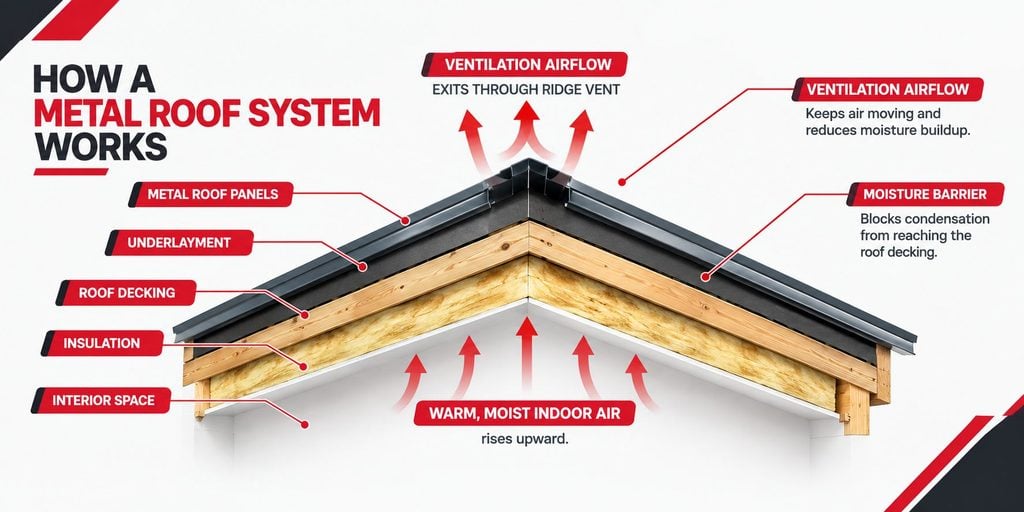
A properly selected moisture-control layer can provide several benefits within the overall roofing system.
| Benefit | Purpose |
|---|---|
| Water protection | Helps provide secondary protection from moisture |
| Roof deck protection | Helps keep moisture away from the decking |
| Secondary defense | Adds another protective layer beneath metal panels |
| Moisture management | Supports the overall roof moisture-control system |
| Condensation management | Can contribute to condensation control when used with proper ventilation and insulation |
A moisture barrier should not be considered a replacement for proper flashing, ventilation, insulation, or correct installation.
What Goes Under a Metal Roof?
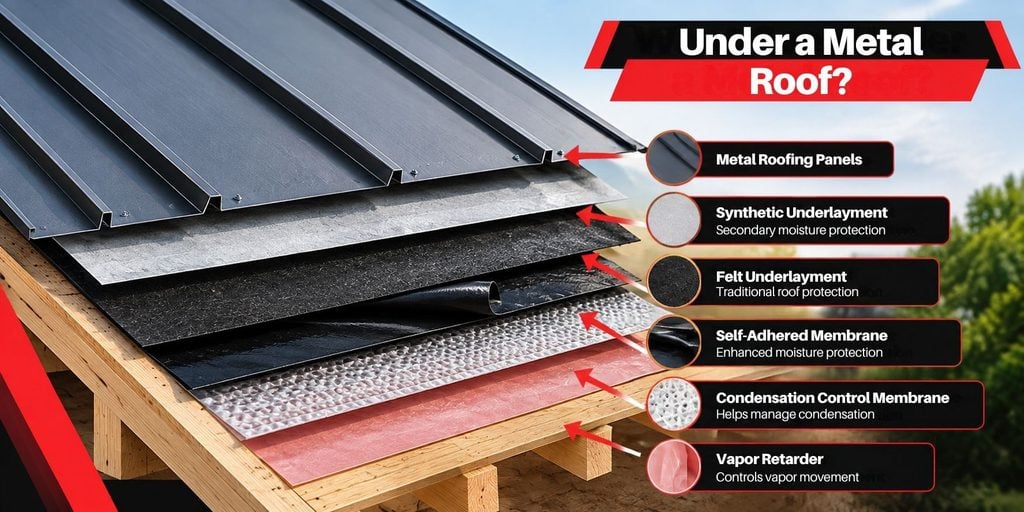
Several materials can be installed beneath metal roofing to provide secondary moisture protection, manage condensation, or control water vapor movement. The appropriate material depends on the roof assembly, climate, roof slope, ventilation, insulation, metal roofing type, and manufacturer specifications.
The following table compares common materials used beneath metal roofing and their primary purposes.
| Material | Main Purpose | Typical Consideration |
|---|---|---|
| Synthetic underlayment | Secondary moisture protection | Common option for many roofing systems |
| Felt underlayment | Traditional roof protection | May be specified for certain applications |
| Self-adhered membrane | Enhanced moisture protection | Useful in selected vulnerable areas |
| Condensation-control membrane | Helps manage condensation | Used in appropriate metal roofing assemblies |
| Vapor retarder | Controls vapor movement | Depends on climate and building assembly |
Synthetic Underlayment
Synthetic underlayment is commonly used beneath modern metal roofing systems to provide secondary protection against moisture. Installed between the metal panels and roof deck, it helps protect the decking if water gets beneath the primary roofing material. The selected product must be compatible with the metal roofing system and installed according to the manufacturer’s specifications.
Felt Underlayment
Felt underlayment is a traditional roofing material that provides an additional protective layer beneath metal roofing. It may still be specified for certain roofing applications, depending on the roof design and installation method. Its suitability should be confirmed against the manufacturer’s requirements.
Self-Adhered Membranes
Self-adhered membranes provide additional moisture protection in selected areas of a roof where increased resistance to water intrusion is needed. Their application depends on the roof design, climate, and compatibility with the metal roofing system. They should be installed according to the manufacturer’s instructions.
Condensation-Control Membranes
Condensation-control membranes help manage moisture that may form beneath metal roofing panels when warm, humid air comes into contact with colder surfaces. These products are used in appropriate metal roofing assemblies and should work alongside proper insulation and ventilation to help reduce condensation-related problems.
Vapor Retarders
Vapor retarders help control the movement of water vapor through the roofing assembly. Unlike roofing underlayment, which primarily provides secondary protection against liquid water, vapor retarders manage moisture in vapor form. Their use depends on the climate, building design, insulation, and overall roof assembly.
The appropriate material should be selected based on the complete roofing system rather than simply choosing a product labeled as a moisture barrier. Always follow the roofing manufacturer’s specifications to ensure the selected material is suitable for your metal roof.
What Is the Best Moisture Barrier for a Metal Roof?
The best moisture barrier for a metal roof depends on the roofing system, climate, roof slope, and installation requirements. Synthetic underlayment is commonly used in many metal roofing systems, while compatible self-adhered membranes may provide additional protection in vulnerable areas. The appropriate material should always meet the roofing manufacturer’s specifications.
Does a Metal Roof Need Underlayment?
The answer depends on the roofing system and installation method.
A metal roof installed over plywood may use an appropriate underlayment between the metal panels and roof deck. Metal roofing installed over purlins can have different requirements.
Standing-seam and exposed-fastener systems may also require different installation details.
Before deciding whether underlayment is needed, consider:
- Metal roofing type
- Roof deck
- Roof slope
- Installation method
- Existing roof conditions
- Manufacturer specifications
- Local building requirements
Does a Metal Roof Cause Condensation?
A metal roof does not automatically cause condensation. Condensation occurs when warm, humid air comes into contact with a colder surface and moisture forms.
A metal roof condensation barrier or compatible condensation-control membrane may help manage moisture in suitable roofing assemblies. However, controlling indoor humidity, limiting air leakage, and providing appropriate insulation and ventilation are also important.
Several factors can affect the risk of condensation:
- Indoor humidity
- Temperature differences
- Poor ventilation
- Inadequate insulation
- Air leakage
- Roof design
Does a Metal Roof Need a Vapor Barrier?
A vapor barrier for a metal roof helps control water vapor movement through the roofing assembly. Whether a vapor barrier under a metal roof is necessary depends on the climate, insulation, air sealing, and overall roof design. Unlike roofing underlayment, a vapor barrier or vapor retarder is intended to manage water vapor rather than provide secondary protection against liquid water.
| Component | Primary Function |
|---|---|
| Metal panels | Primary exterior weather protection |
| Roofing underlayment | Secondary moisture protection |
| Moisture-control membrane | Helps manage moisture |
| Vapor retarder | Controls water vapor movement |
| Insulation | Helps control heat transfer |
| Ventilation | Helps manage heat and moisture |
Because these components perform different jobs, one should not automatically be substituted for another.
What Goes Under a Metal Roof Installed Over Plywood?
When metal roofing is installed over plywood, an appropriate underlayment or moisture-control layer may provide secondary protection between the panels and decking.
Before installation, the plywood should be checked for:
- Water damage
- Rot or deterioration
- Structural problems
- Areas requiring repair
The selected underlayment should be compatible with the roofing system and installed according to the manufacturer’s requirements.
Can You Install a Metal Roof Without Underlayment?
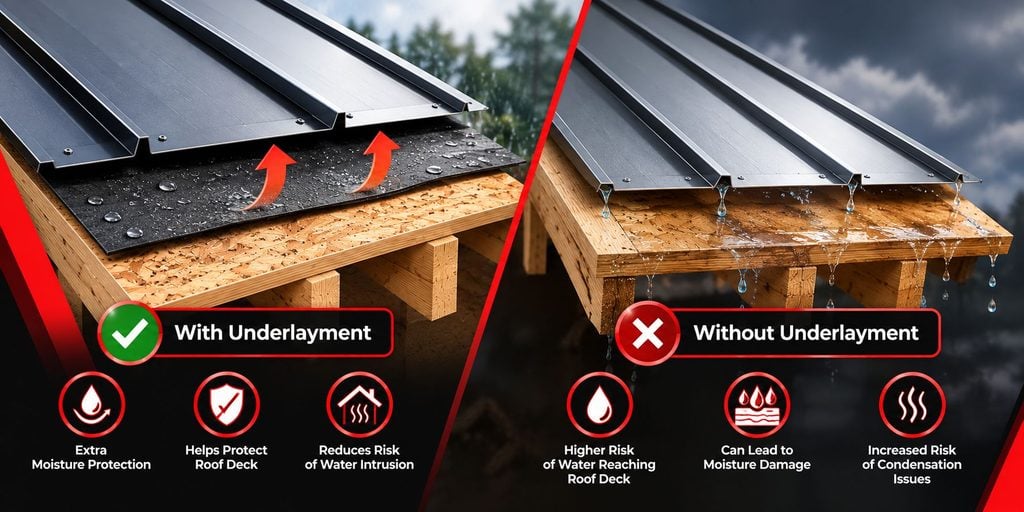
Some metal roofing systems can be installed without conventional roofing underlayment. However, the decision depends on the roofing system, roof design, and installation requirements. Homeowners should not assume that underlayment can be omitted from every metal roof.
Before installing a metal roof without underlayment, consider the following factors:
- Roofing system: Different metal roofing systems have different moisture protection and installation requirements.
- Roof deck: Metal roofing installed over purlins may have different requirements from roofing installed over plywood.
- Roof slope: Roof pitch affects water drainage and the appropriate installation method.
- Manufacturer specifications: Some roofing systems require specific underlayment materials or moisture-control methods.
- Local building codes: Building requirements may specify when underlayment is necessary.
- Existing roof conditions: The condition of the roof deck and existing roofing materials can affect installation options.
Installing a metal roof without the required underlayment can reduce secondary moisture protection and increase the risk of water reaching the roof deck or other roofing components.
Before deciding to omit underlayment, have the complete roofing assembly evaluated to determine how it will manage water intrusion and condensation. Always follow the manufacturer’s installation instructions and applicable local building requirements.
Does Building Code Require a Moisture Barrier Under Metal Roofing?
Building requirements can vary based on location, climate, roof type, slope, and construction method.
Manufacturer installation instructions are also important because they may specify approved underlayment products and installation methods.
For a specific project, local building requirements and manufacturer specifications should be checked before installation.
Does a Metal Roof Need a Moisture Barrier Over Shingles?
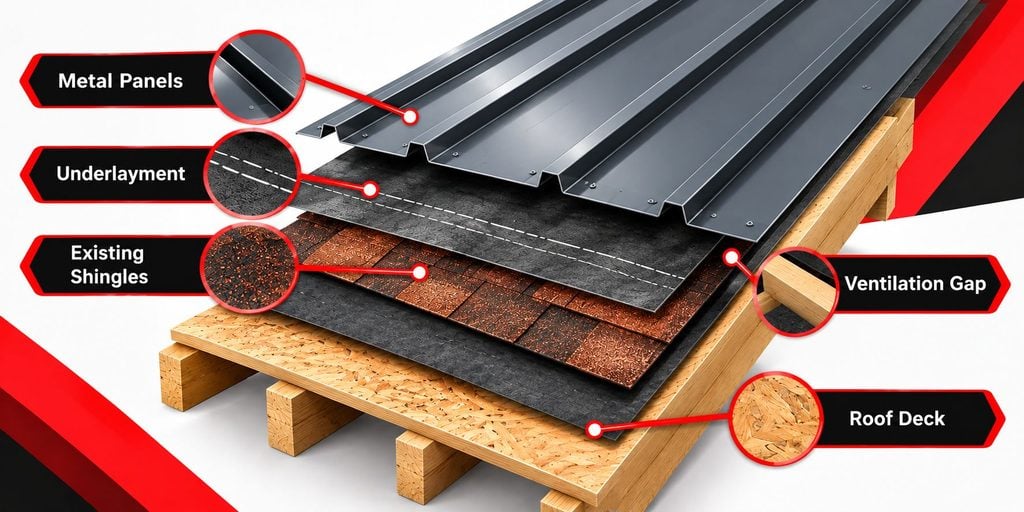
Installing metal roofing over existing shingles does not automatically eliminate the need for moisture protection.
The existing roof should be inspected for moisture damage, deteriorated shingles, decking problems, and other conditions that could affect the new roof.
The appropriate approach depends on the existing roof condition, installation method, metal roofing system, manufacturer requirements, and applicable building requirements.
What Happens If You Don’t Use a Moisture Barrier?
If appropriate moisture protection is not included where the roofing system requires it, moisture may have a greater opportunity to reach the roof deck or other components.
Potential concerns include:
- Moisture reaching the roof deck
- Condensation beneath panels
- Wood deterioration when moisture remains present
- Mold or mildew under suitable conditions
- Reduced secondary protection against water intrusion
A moisture barrier is only one part of a complete roofing system, but it can provide an important layer of protection when properly selected and installed.
How Is a Moisture Barrier Installed Under a Metal Roof?
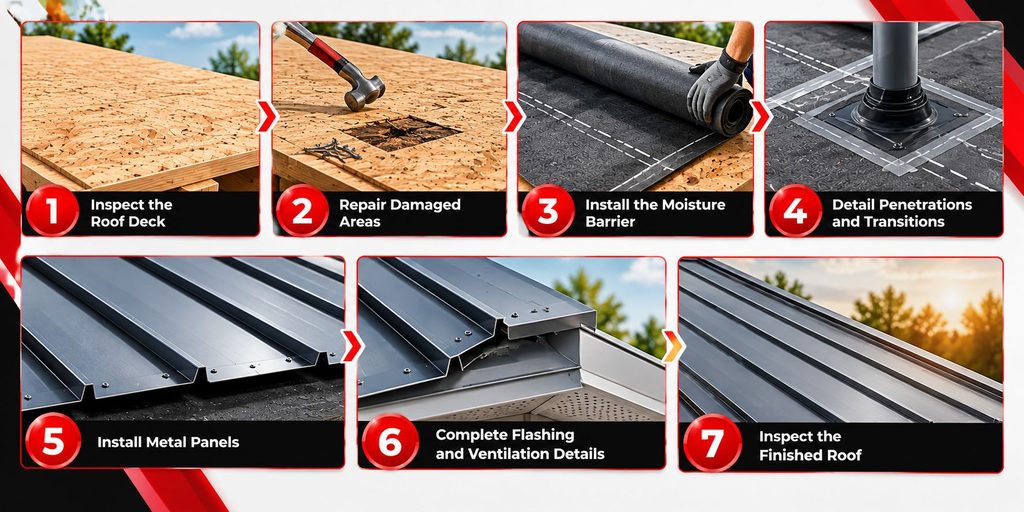
Installing a metal roof moisture barrier requires the correct material, suitable roof deck conditions, and installation details that match the roofing manufacturer’s requirements. Although the exact roof replacement process varies by roofing system, installation generally involves:
- Inspecting the roof deck.
- Repairing damaged or deteriorated areas.
- Installing the specified underlayment or moisture-control layer.
- Detailing penetrations and vulnerable transitions.
- Installing metal panels according to manufacturer specifications.
- Completing flashing and ventilation details.
- Inspecting the finished roofing system.
Proper overlaps, fastening, flashing, and installation details are important because even a high-quality moisture-control product cannot compensate for poor installation.
Protect Your Home With the Right Roofing System
A metal roof can provide durable, long-term protection, but the right moisture barrier, underlayment, insulation, ventilation, and flashing are essential to its performance. The appropriate solution depends on your roof design, climate, and installation requirements.
Planning a metal roof replacement or a larger exterior upgrade? Melo Roofing provides roofing services, metal roofing, residential siding, and window installation to help protect and improve your home’s exterior.
Frequently Asked Questions
Does a metal roof need underlayment?
Many metal roofs use underlayment for added moisture protection, but requirements vary by roof design, climate, manufacturer, and local requirements.
Can you install a metal roof without underlayment?
It depends on the roofing system, manufacturer specifications, roof design, and applicable building requirements.
What goes between a metal roof and plywood?
An appropriate roofing underlayment or moisture-control layer may be installed between the metal panels and plywood.
Does a metal roof need a vapor barrier?
Not always. The need depends on the roof assembly, climate, and how moisture and vapor are managed.
Is a moisture barrier the same as a vapor barrier?
No. Moisture protection generally addresses liquid water, while vapor barriers or retarders help control water vapor movement.
Does a metal roof cause condensation?
Not automatically. Condensation depends on factors such as humidity, ventilation, insulation, and air leakage.
How do you prevent condensation under a metal roof?
Proper ventilation, insulation, air sealing, humidity control, and an appropriate roof assembly can help reduce condensation risk.
