



Posted By SEO Root

10 mins

10/06/2026
How Long Do Windows Last? Signs It’s Time for Replacement
Nobody thinks about their windows until something goes wrong. That’s just how it is. You notice a draft while you’re sitting on the couch in January, or you open your energy bill and wonder why it’s $40 higher than last month, and only then does it occur to you that the windows might be the culprit.
The thing is, windows do have a shelf life. And once you know what to look for, it’s actually not that hard to tell when yours are on their way out.
How Long Do Windows Last?
It really comes down to what they’re made of. Vinyl windows generally hold up for 20 to 30 years. Wood can last just as long, honestly sometimes longer, but only if you keep up with painting and sealing them regularly (a lot of homeowners don’t, which shortens that window considerably). Aluminum frames tend to wear out faster, more like 15 to 20 years. Fiberglass is the toughest of the bunch and can stretch past 30, even 40 years in some cases.
But those numbers are more of a guideline than a guarantee. A house that gets hammered by humidity, freezing winters, or brutal summer sun is going to age its windows faster than a house in a mild climate. And installation quality plays a bigger role than most people realize; a cheaply installed window can start failing well before its “expected” lifespan is up, while a properly installed one might outlast it by years.
What Factors Affect How Long Windows Last?
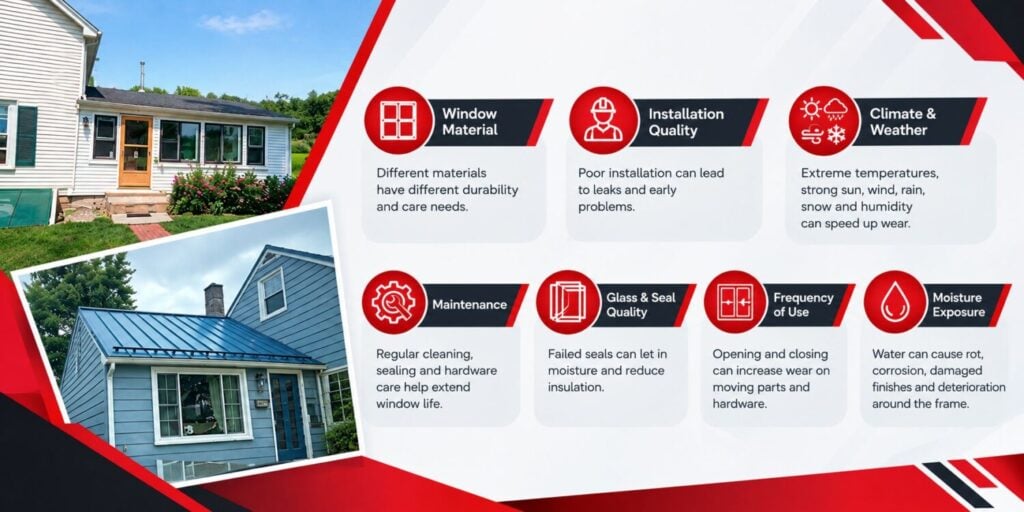
Several factors can affect the lifespan of residential windows. Two windows made from the same material may have very different service lives depending on how they are installed, maintained, and exposed to the elements.
- Window material: Vinyl, wood, fiberglass, aluminum, and composite windows have different durability and maintenance requirements.
- Installation quality: Poor installation can lead to air leaks, water intrusion, and premature window failure.
- Climate and weather: Extreme temperatures, strong sunlight, wind, rain, snow, and humidity can gradually wear down windows.
- Maintenance: Regular cleaning, sealing, painting, and hardware maintenance can help extend the life of a window.
- Glass and seal quality: Failed seals can allow moisture between double- or triple-pane glass and reduce the window’s insulating performance.
- Frequency of use: Windows that are opened and closed frequently may experience more wear on hardware and moving components.
- Moisture exposure: Persistent water exposure can cause wood rot, corrosion, damaged finishes, and deterioration around the window opening.
Window Types and Their Lifespans
The type of window you have affects its durability, maintenance needs, and expected service life. Here are some of the most common residential window materials and their typical lifespans.
| Window Type | Typical Lifespan | Key Consideration |
|---|---|---|
| Vinyl Windows | 20–30 years | Low maintenance and moisture resistant |
| Wood Windows | 20–30+ years | Require regular painting and sealing |
| Fiberglass Windows | 30–50 years | Durable and resistant to warping |
| Aluminum Windows | 20–30 years | Durable but can be affected by corrosion |
| Composite Windows | 30+ years | Durable with relatively low maintenance |
Vinyl windows typically last 20–30 years and require relatively little maintenance. Wood windows can last 20–30 years or longer when they are properly painted, sealed, and protected from moisture.
Fiberglass windows are highly durable and can often last 30–50 years with proper installation and maintenance. Aluminum windows generally provide around 20–30 years of service, while composite windows can last 30 years or more depending on the product, installation, and maintenance.
These are general estimates rather than guarantees. Climate, installation quality, maintenance, moisture exposure, and everyday use can all affect the actual lifespan of a window.
Signs You Need New Windows
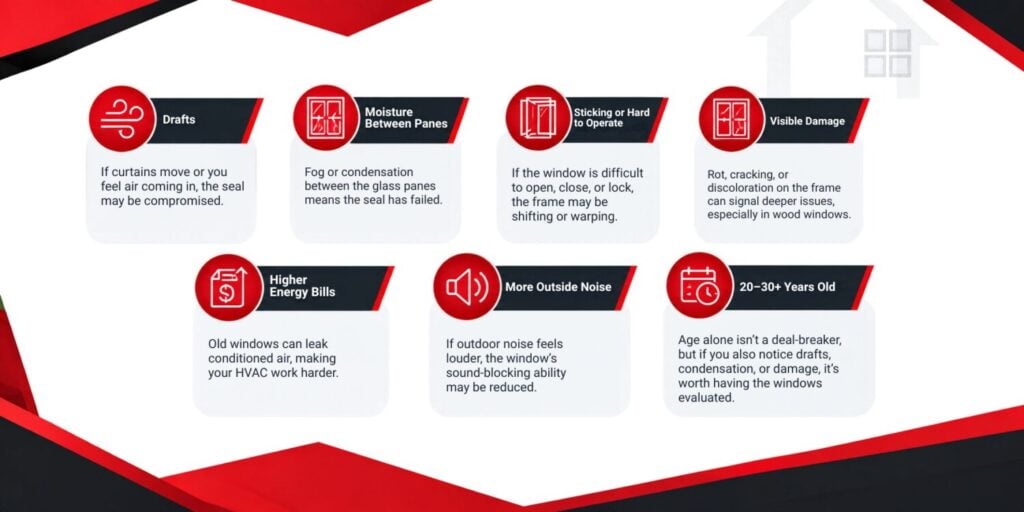
Windows don’t usually just quit on you overnight. There’s almost always a buildup of small annoyances before the big failure. A few things worth paying attention to:
You Feel a Draft Even When the Window’s Shut
If your curtains move a little on a windy day and the window’s closed, that’s air getting in somewhere it shouldn’t.
Fog or Moisture Is Sitting Between the Panes
This one’s a dead giveaway that the seal has broken down, and unfortunately, it’s not something you can fix; once that seal fails, replacement is really the only option.
The Window’s a Pain to Open, Close, or Lock
Sticking, sagging, refusing to latch properly, that’s often the frame itself shifting or warping.
You Can See Rot, Cracking, or Discoloration on the Frame
Wood is especially prone to this, and it tends to start from the inside, so by the time it’s visible, it’s usually further along than it looks.
Your Energy Bills Have Crept Up, and You Can’t Explain Why
Old, worn-out windows are notorious for quietly leaking conditioned air.
Outside Noise Seems Louder Than It Used To Be
Windows lose their sound-blocking ability as the seals and materials degrade.
If any of this sounds familiar, especially more than one or two, it’s probably worth having someone take a look.
Your Windows Are 20–30+ Years Old
Age alone does not mean your windows need to be replaced. A well-maintained window can continue performing properly beyond its typical lifespan. However, if your windows are 20–30 years old and you’re also noticing drafts, condensation between panes, difficult operation, or visible deterioration, it’s worth having them evaluated. Older windows may also lack some of the efficiency and performance features available in modern replacement windows.
When to Actually Replace Them
There’s no magic date circled on a calendar, but there are smarter times than others to make the call. Windows creeping up on that 20-year mark are worth inspecting even if nothing seems obviously wrong; small problems are a lot cheaper to fix before they turn into a full seal failure or rotted frame.
It also just makes sense to handle replacement before the rough weather hits rather than during it. Nobody wants to be dealing with a drafty window in the middle of a cold snap because they put off the decision too long.
And if you’re already tackling a bigger project, say, a new roof or siding, it’s often worth folding window replacement into that same timeline. You save on labor, and honestly, it’s just less disruptive to deal with everything at once instead of spreading it out over separate projects.
Repair or Replace? Here’s How to Think About It
This is where most people get stuck, so let’s break it down simply.
Age matters first. A newer window with a small issue, like a broken latch or some cracked caulking, is usually worth repairing. But a window that’s already pushing 15 or 20 years old? Repairing it might just buy you a little time before you’re back to square one.
Cost is the next thing to check. A decent rule of thumb: if the repair is going to run you 30-50% (or more) of what a new window would cost, you’re probably better off replacing it outright. Especially since older windows have a habit of needing repeat repairs, and those costs add up fast.
Then there’s efficiency to think about. Window technology has come a long way, even in the last 10-15 years. If your windows are original to the house, swapping them out could mean a real difference in your energy bills, not just a fix for whatever’s currently bugging you.
And one more thing worth asking: how many times have you already called someone out for this same window? If it’s more than once, that’s usually your answer. The problem’s not the fix; it’s the window.
What Are the Benefits of Replacing Old Windows?
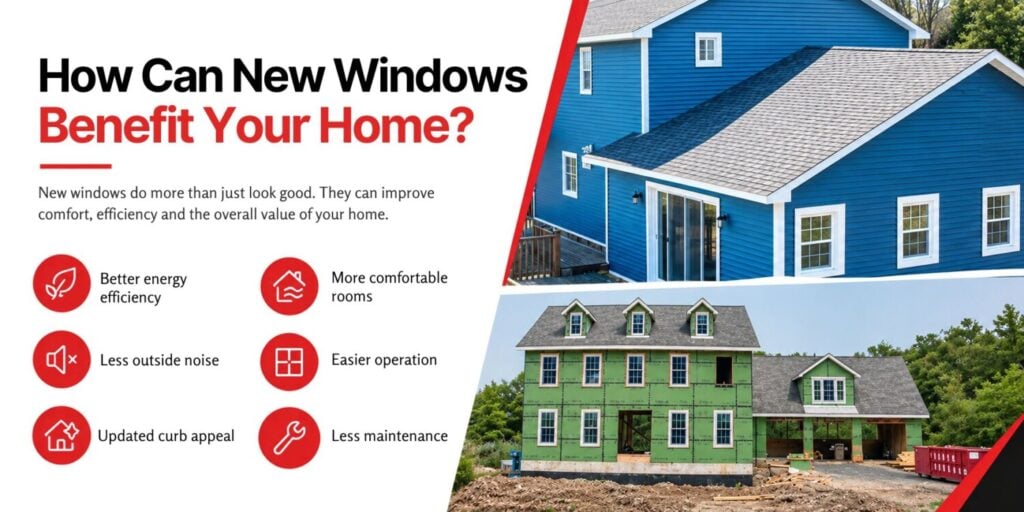
Replacing old or poorly performing windows can improve several aspects of your home. While the results depend on the condition of the existing windows and the replacement products you choose, modern windows can offer practical improvements in comfort, efficiency, and everyday use.
- Better energy efficiency: Modern window designs can reduce unwanted heat transfer compared with older, inefficient windows.
- Improved comfort: Better-performing windows can help reduce drafts and uncomfortable temperature differences near the glass.
- Reduced air leakage: Properly installed replacement windows can help create a tighter seal around the opening.
- Better noise reduction: Certain glass and window configurations can reduce the amount of outdoor noise entering your home.
- Easier operation: New windows can make opening, closing, locking, and cleaning more convenient.
- Updated appearance: Replacement windows can give both the interior and exterior of a home a refreshed look.
- Less maintenance: Materials such as vinyl and fiberglass generally require less ongoing maintenance than traditional painted wood.
- Potentially improved home appeal: Updated, well-maintained windows can contribute to the overall appearance and functionality of a property.
How Often Should Windows Be Replaced?
There is no fixed schedule for replacing residential windows. For many homes, 20–30 years is a useful general benchmark, but the actual lifespan depends on the window material, installation, maintenance, climate, and overall condition.
Instead of replacing windows based on age alone, pay attention to their performance. Persistent drafts, failed seals, difficult operation, visible deterioration, and poor insulation can be stronger indicators that replacement should be considered.
Installation Matters Just as Much as the Window
Something people don’t always think about: even a great window can underperform if it’s installed badly. Gaps around the frame, bad flashing, a seal that wasn’t done right—any of that can cause the exact same drafts and energy loss you were trying to get rid of in the first place.
It’s also worth looking at your windows and roof together, since issues like water intrusion or damaged trim tend to show up in both places. At Melo Roofing, we build that into our exterior assessments, so if you end up needing new windows, you’re getting ones that are actually sealed and flashed correctly, not just swapped in and hoped for the best.
Wrapping Up…
Windows rarely fail out of nowhere. There’s almost always a warning sign first, whether that’s a draft, some fogging, a sticky frame, or a bill that keeps creeping up. Catching it early saves you money and a headache later.
If it’s been a while since anyone’s looked at your windows, or a few of these signs sound a little too familiar, it might be time for a second opinion. Melo Roofing offers window assessments alongside our roofing work, so you get an honest read on what your home actually needs repair or replacement without the guesswork.
Frequently Asked Questions
How long do windows typically last?
Most residential windows last 15–30 years, while fiberglass and composite windows can last longer with proper care.
How do I know when my windows need replacing?
Common signs include drafts, condensation between panes, difficult operation, frame damage, rising energy bills, and poor performance.
Should I replace 20-year-old windows?
Not necessarily. If they still perform well, replacement may not be needed. However, drafts, failed seals, damage, or operating problems may indicate it is time for an evaluation.
Are new windows worth it?
New windows can improve energy efficiency, comfort, noise reduction, appearance, and ease of operation. The value depends on the condition of your existing windows.
What is the longest-lasting window material?
Fiberglass and composite windows can last 30 years or more with proper installation and maintenance.
Can old windows be repaired instead of replaced?
Yes. Minor hardware, weatherstripping, or isolated glass problems may be repairable. Severe frame damage, rot, or repeated failures may require replacement.
How long do vinyl windows last?
Vinyl windows typically last 20–30 years, depending on installation, maintenance, and climate.
How long do fiberglass windows last?
Fiberglass windows typically last 30–50 years with proper installation and maintenance.
